


Here in the northern hemisphere, we’re firmly wrapped in Autumn, my favourite season. The leaves are a cascade of yellow, brown and scarlet and the natural world is slowly winding down preparing to rest, as the nights draw in and we hunker down. It’s still incredibly warm here in the UK, we’ve seen 20 degrees over the last couple of days and many plants are still blooming, but soon the hard frost will envelope the ground, they’ll die back quickly and if left uncovered, the soil will suffer from erosion and a lack of nutrition.
To prevent this, autumn’s a really good time to mulch garden and allotment beds, to protect and nurture the soil over winter until the growing season starts in earnest again next year. Check out this brilliant no-dig video by permaculture legend Morag Gamble to see how to create a no-dig bed. This was the first video I ever saw of Morag’s; it was my doorway into permaculture and the moment everything changed.
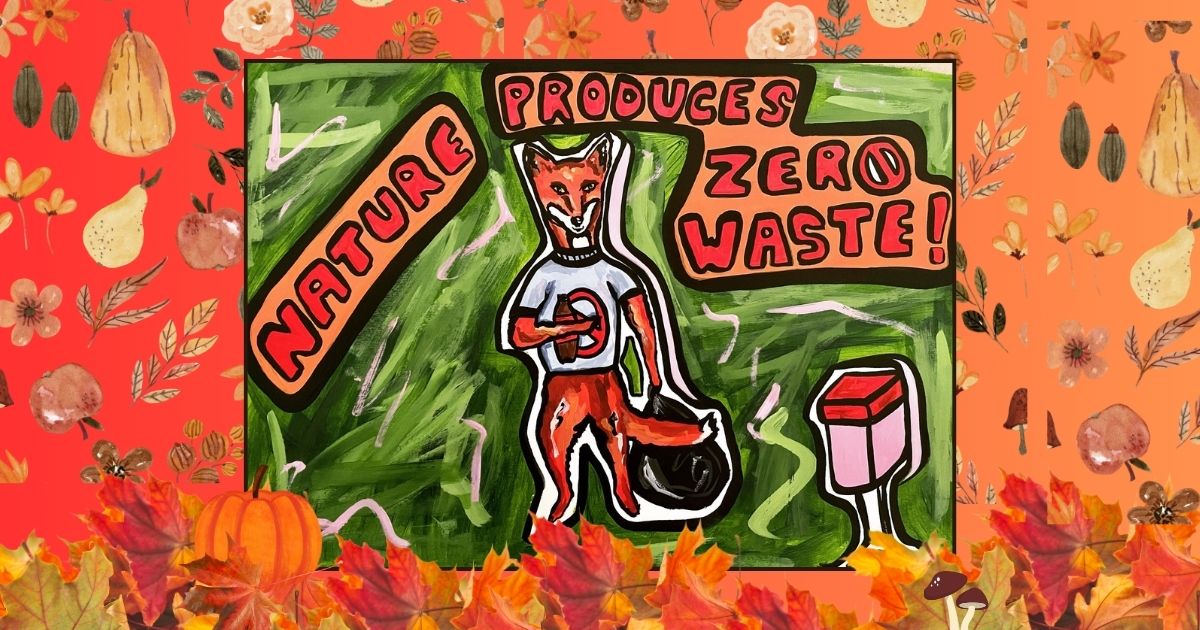
Soil is a complex living organism with vast networks of life and without healthy soil we cannot continue to exist on the earth. As US radio broadcaster Paul Harvey said in 1978, “Despite all our accomplishments, we owe our existence to a six-inch layer of topsoil and the fact it rains.” A couple of years ago myself and my fabulous friend and colleague, Six Inches of Soil film producer Claire Mackenzie, did a school visit in London. We spoke to the kids about the importance of this mysterious web of life. To prepare, I interviewed Erin Wiedmer, a brilliant Soil Scientist who supplied the microscopic soil footage for the film. The following is from our chat and a document I created. Erin gave an overview about how this incredible ecosystem works in balance and explained how nothing in nature is ever wasted.
Soil superheroes
In about a cubic centimetre of soil, there are so many species and individuals we can hardly count them. The bulk of these are usually bacteria but there are also fungi. Then there are the protozoans; each individual can eat about 10,000 bacteria a day, micro arthropods, nematodes and macro arthropods.
The coolest nematodes are fungal feeding. They have this little knife inside their mouth which they throw out like a spear, into the fungi. Some fungi also have a really cool way of capturing nematodes, they have special cells like lassoes. They set traps and as soon as the nematodes hit the trap, the lasso springs shut and captures them.

And then you have predatory nematodes that take in anything they can fit in their mouth. It’s really interesting to look at them, they travel through the soil following traces to try and hunt their prey like any other animal. As you move larger in scale, you have the micro arthropods, which are usually less than a centimetre, like little mites and spiders.
They’re hunting the larger nematodes or ciliates that might be in the soils, the protozoans, and taking the nutrients from those and pooping them out. This provides nutrients that the plants and everything else can use. Then as they grow bigger you have this lockstep system, the plants put sugars into the soils to grow the bacteria and fungi, which are going to provide them with nutrients in exchange. As they’re growing, it gives the protozoans a really great food source. So, then you get more cycling of nutrients. As everything eats it poops and that becomes nutrients for everything else. Those nutrients don’t sit around in the soil, everything that can grab something will grab it and reproduce and create as much as it can.
Super superheroes
Then you have the worms, which are the super superheroes. Worms are consummate aerobes, which means they can only live where oxygen levels are above 6ppm (parts per million). They don’t produce enzymes to digest cellulose or lignin so while they take a mouthful of organic matter, they aren’t actually eating it. What they are eating are all those other superheroes, the bacteria, fungi, protozoa, nematodes and arthropods that are ON the organic matter. They squish and squeeze these organisms in their digestive tracts – crushing and mashing them up until the juices can be absorbed. The very best indigenous and local species of aerobic bacteria, fungi, protozoa and nematodes maintain stable populations within the earthworm gut inoculated at birth by the mother. These populations outcompete and inhibit any pathogens that the earthworm may have eaten and are pooped out along with the broken-down organic matter to spread extremely beneficial organisms everywhere the earthworm travels.
The same holds true for the mucous layer that coats the earthworm’s body. Anything nasty that touches it will be inhibited, outcompeted and consumed by this layer of good guys held in the mucous including diseases, pests and problem organisms. Worms operate in a thin band of temperature and humidity. When it rains and the soils have filled up with water, they burrow up to the surface and can be forced to leave if the oxygen levels fall, as air is replaced by water. But UV light can kill them quickly – sometimes even just 15 seconds of direct sun will be enough to cause serious harm.
This ecosystem is vital to our survival and it’s really important we do everything we can to protect it. If you see a worm on the surface of your soil, cover it over. By keeping soil healthy you’ll create the perfect growing environment for your plants and a harmonious ecosystem that nurtures all.


Leave a Reply to abundanttimesCancel reply